
“Ho partecipato con Bignami, Segio e un romano di cui non conosco il nome, alla rapina con duplice omicidio di Pietro Cuzzoli e Ippolito Cortellessa a Viterbo. Intimammo l’alt, ma non si arresero”. 11 agosto 1980. Prima linea spara e uccide due carabinieri. A Ponte di Cetti. In pieno giorno, dopo una rapina in uno sportello bancario al Pilastro, quartiere popolare di Viterbo dove il partito comunista è molto forte. A parlare è Michele Viscardi. Di fronte ha il pm Avella della Procura di Bergamo, città dove Viscardi, esponente di spicco di Prima linea, è nato nel 1956. E’ il verbale in cui si dissocia dalla lotta armata e parla delle operazioni di cui ha preso parte. Dall’omicidio del giudice Alessandrini allo scontro a fuoco dove hanno perso la vita Cuzzoli e Cortellessa. Un documento conservato oggi presso l’archivio del Senato della Repubblica a Roma. Il verbale d’interrogatorio è del 19 ottobre 1980. Un paio di mesi dopo i fatti di Ponte di Cetti.
(…)
11 agosto 1980. La rapina è il primo passaggio. “La banca rapinata – continua Viscardi – fu scelta da noi personalmente, dopo un lavoro di ricerca durato una settimana. In altre parole non vi fu nessun basista locale tanto che alla sera rientravamo regolarmente a Roma in autobus. Non mi risulta che nel viterbese vi fossero elementi, anche solo di appoggio di Prima linea”.
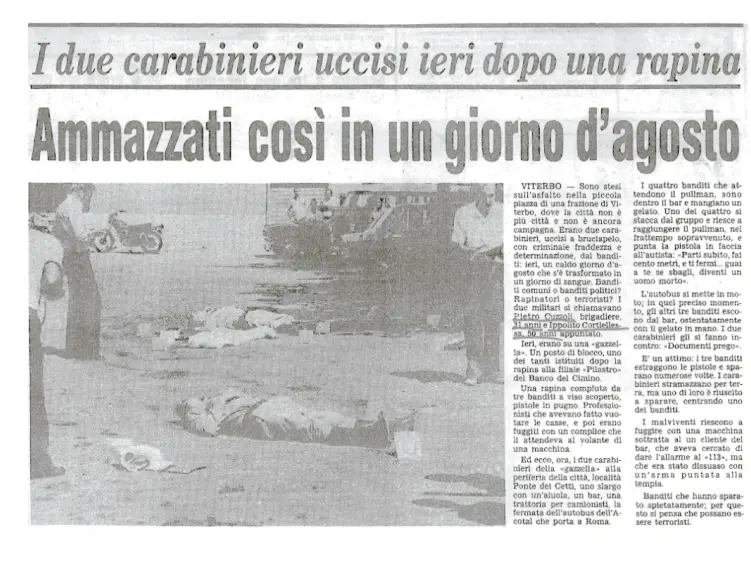
Un racconto che diventa ancor più ricco di particolari se si prende un testo scritto da un altro carabiniere e rintracciabile in rete. Il titolo: “Ippolito Cortellessa e Giuseppe Cerini. Due vivaresi, due carabinieri”. Cortellessa era infatti di Vivaro Romano in provincia di Roma. La pubblicazione è del 2010 e l’autore si chiama Alberto Pulicani, maresciallo capo in servizio presso il comando generale dell’Arma. La sua è anche una raccolta, accompagnata da foto dell’epoca e ritagli di giornale. “Quel tragico 11 agosto 1980 – scrive il maresciallo dei carabinieri Pulicani – per reperire risorse economiche (il cosiddetto autofinanziamento), un gruppo di sei militanti prende di mira la filiale Pilastro della Banca del Cimino per compiervi una rapina. Tre dei componenti del gruppo entrano nell’Istituto bancario a volto scoperto, con molta calma e le armi in pugno; uno di loro dice ‘E’ una rapina, siamo professionisti, se nessuno si muove non succederà nulla’; prendono il denaro e fuggono su una Renault sulla quale un quarto complice è in attesa, al volante. Tutte le forze di polizia vengono allertate ed inizia la caccia ai rapinatori, dei quali in quel momento ancora non è noto se siano criminali comuni o terroristi. La Renault utilizzata per fuggire viene abbandonata poco dopo. Il gruppo si divide e tre dei rapinatori raggiungono Ponte dei Cetti, una località alla periferia di Viterbo, sulla via Cassia, per salire su un autobus di linea del Cotral allo scopo di sfuggire ai numerosi posti di blocco istituiti dopo la rapina”.
Poco prima dell’arrivo dell’autobus diretto a Roma “giunse una pattuglia di carabinieri, che controllò il Bignami”. A parlare è sempre Viscardi, e il verbale è sempre quello dell’interrogatorio del 1980, due mesi dopo l’uccisione di Cuzzoli e Cortellessa.
Bignami mostrò ai carabinieri “dei documenti francesi, parlando francese e i carabinieri, che nel frattempo avevano fatto fermare il pullman, non ebbero niente da obiettare. ‘Passato’ Bignami, uscimmo anche noi tre dal bar diretti al pullman: a questo punto i carabinieri ci chiesero i documenti, nonché di vedere il contenuto della borsa del ‘romano’”. A questo punto lo scenario cambia improvvisamente. “Tirammo fuori le armi – prosegue Viscardi – e ci trovammo così Segio ed il romano sul carabiniere ed io sull’altro carabiniere (Bignami era praticamente sul pullman)”. Quattro contro due. Dentro la borsa “del romano” c’era probabilmente il contante della rapina in banca fatta qualche ora prima al Pilastro. I terroristi puntano subito le pistole contro Cuzzoli e Cortellessa, che, dal verbale della procura di Bergamo, sembrerebbero essere disarmati. Inizialmente è un vero e proprio stallo. Tant’è che un testimone dei fatti di allora, che vuole restare anonimo, racconta che uno dei due carabinieri avrebbe invitato i terroristi ad abbassare le armi e a consegnarsi. “Lascia stare e abbassa le armi”, disse.
Segio, Viscardi e un romano puntano le pistole contro Cuzzoli e Cortellessa. Bignami nel frattempo è salito sul pullman alle loro spalle. “Intimammo l’alt ai carabinieri – continua Viscardi il racconto dell’11 agosto a Ponte di Cetti -, non si arresero. Ci fu una colluttazione con il carabiniere, nel corso della quale partì un colpo e mi ferì la gamba. Spararono poi un po’ tutti, e fuggimmo verso il casolare sequestrando l’autovettura di una persona presente. Preciso che non fu usata nessuna delle armi trovate poi a Sorrento, o meglio preciso che a Viterbo fu usata la Beretta 925 trovata a Sorrento (e che non è quella sottratta ai carabinieri in quella occasione). Ci portammo poi nel casolare isolato, scelto casualmente, dove trovammo dapprima padre, madre e due bambini e dove poi sequestrammo in casa altre dodici, tredici persone, ma mano che arrivavano sul posto”.
Nella rete dei posti di blocco – prosegue il suo racconto il maresciallo Pulicani – Ponte dei Cetti è affidato alla gazzella, l’Alfa 1800 del Nucleo radiomobile, di Ippolito Cortellessa e del brigadiere Pietro Cuzzoli; alla richiesta dei documenti due terroristi fingono di prenderli dai borselli, invece estraggono le pistole e sparano contro i due carabinieri, che nel conflitto a fuoco colpiscono il terrorista Michele Viscardi, ma entrambi vengono feriti mortalmente. Successivamente, nell’ambito delle ricerche organizzate per catturare gli autori del gesto criminale anche il maresciallo maggiore Antonio Rubuano, comandante della stazione di Montefiascone perde la vita in un incidente stradale mentre accorre a verificare la segnalazione di un individuo sospetto”.
Fonte
TusciaWeb
“Intimammo l’alt ai carabinieri Cuzzoli e Cortellessa, ma non si arresero… e li abbiamo uccisi”
Approfondimento
Viterbo Post
Cuzzoli e Cortellessa, trentacinque anni fa
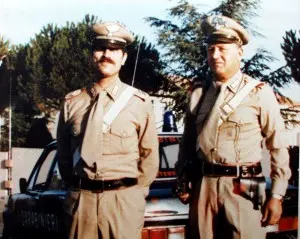
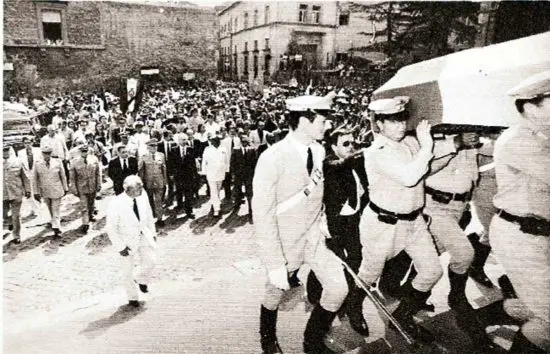
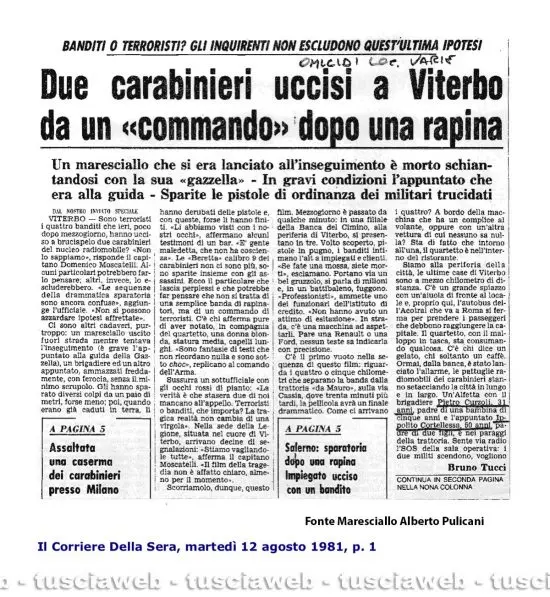
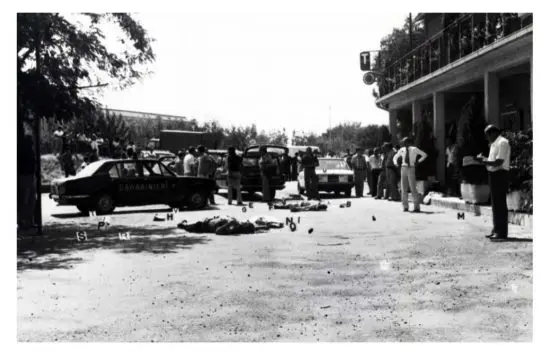
da Tuscia Web
raccontiamoviterbo.it
English version
Pietro Cuzzoli, 31 years old, marshal of the Carabinieri
Ippolito Cortellessa, 49 years old, marshal of the Carabinieri
“I participated with Bignami, Segio, and a Roman whose name I do not know, in the robbery with the double murder of Pietro Cuzzoli and Ippolito Cortellessa in Viterbo. We ordered them to stop, but they did not surrender.” August 11, 1980. First line shoots and kills two carabinieri. At Ponte di Cetti. In broad daylight, after a robbery at a bank branch in Pilastro, a popular neighborhood in Viterbo where the Communist Party is very strong. Michele Viscardi is speaking. In front of him is the prosecutor Avella of the Bergamo Prosecutor’s Office, the city where Viscardi, a prominent member of Prima Linea, was born in 1956. It is the report in which he dissociates himself from the armed struggle and talks about the operations he took part in. From the murder of Judge Alessandrini to the shootout where Cuzzoli and Cortellessa lost their lives. A document now kept in the archives of the Senate of the Republic in Rome. The interrogation report is from October 19, 1980. A couple of months after the events at Ponte di Cetti.
(…)
August 11, 1980. The robbery is the first stage. “The bank we robbed – Viscardi continues – was personally chosen by us, after a week-long research. In other words, there were no local contacts, so in the evening we regularly returned to Rome by bus. There were no elements, not even for the support of Prima Linea, in Viterbo.”
A story that becomes even richer in details if we consider a text written by another carabiniere, available on the internet. The title: “Ippolito Cortellessa and Giuseppe Cerini. Two vivaresi, two carabinieri.” Cortellessa was from Vivaro Romano in the province of Rome. The publication is from 2010 and the author is Alberto Pulicani, a chief marshal in service at the general command of the Carabinieri. His is also a collection, accompanied by photos of the time and newspaper clippings. “That tragic August 11, 1980 – writes Carabinieri Chief Marshal Pulicani – to obtain financial resources (self-financing), a group of six militants targeted the Pilastro branch of the Banca del Cimino to commit a robbery. Three members of the group entered the bank institute with their faces uncovered, very calmly and with guns in hand; one of them said ‘It’s a robbery, we are professionals, if no one moves, nothing will happen’; they took the money and fled in a Renault, where a fourth accomplice was waiting, at the wheel. All police forces were alerted and the hunt for the robbers began, who at that moment were still unknown whether they were common criminals or terrorists. The Renault used for the escape was abandoned shortly after. The group split up and three of the robbers reached Ponte dei Cetti, a location on the outskirts of Viterbo, on the Via Cassia, to board a Cotral line bus in order to escape the numerous roadblocks set up after the robbery.”
Just before the arrival of the bus heading to Rome, “a patrol of carabinieri arrived, who checked Bignami.” Viscardi is still speaking, and it is still the 1980 interrogation report, two months after the killing of Cuzzoli and Cortellessa.
“Bignami showed the carabinieri “French documents, speaking French and the carabinieri, who in the meantime had stopped the bus, had nothing to object to. ‘Past’ Bignami, we also left the bar heading to the bus: at this point the carabinieri asked us for the documents, as well as to see the contents of the ‘Roman’ bag.” At this point, the scenario changes suddenly. “We took out the guns – Viscardi continues – and we found Segio and the Roman on the carabinieri and I on the other carabinieri (Bignami was practically on the bus).” Four against two. Inside the ‘Roman’ bag there was probably the cash from the bank robbery a few hours earlier at Pilastro. The terrorists immediately aimed their guns at Cuzzoli and Cortellessa, who, from the Bergamo prosecutor’s report, appear to have been unarmed. Initially, it was a real standoff. So much so that a witness to the events of that time, who wants to remain anonymous, recounts that one of the two carabinieri had invited the terrorists to lower their weapons and surrender. “Leave it and lower your weapons,” he said.
Segio, Viscardi and a Roman aimed pistols at Cuzzoli and Cortellessa. In the meantime, Bignami boarded the bus behind them. “We ordered the carabinieri to stop – Viscardi continues the story of August 11 at Ponte di Cetti – they did not surrender. There was a scuffle with the carabiniere, during which a shot was fired and wounded my leg. Then they all fired a bit, and we fled to the farmhouse by seizing the car of a person present. I emphasize that none of the weapons found later in Sorrento were used, or rather I specify that in Viterbo the Beretta 925 found in Sorrento was used (and it is not the one stolen from the carabinieri on that occasion). We then took refuge in the isolated farmhouse, chosen at random, where we first found father, mother and two children and where we then seized twelve, thirteen more people in the house as they arrived at the scene.”
In the network of roadblocks – the story of Marshal Pulicani continues – Ponte dei Cetti is entrusted to the gazzella, the Alfa 1800 of the Mobile Radio Unit, of Ippolito Cortellessa and the brigadier Pietro Cuzzoli; at the request for documents, two terrorists pretend to take them out of their wallets, instead draw their guns and shoot at the two carabinieri, who in the gunfire hit the terrorist Michele Viscardi, but both are fatally wounded. Subsequently, within the organized searches to capture the authors of the criminal act, also the Major Marshal Antonio Rubuano, commander of the Montefiascone station, lost his life in a traffic accident while rushing to check the report of a suspicious individual.
