
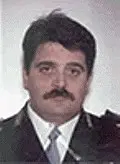
Petri entra in Polizia nell’ottobre del 1973 come allievo guardia frequentando la scuola della Polizia di Stato di Trieste. Trasferito dapprima a Roma, poi a Firenze e Arezzo, la sua residenza resta a Tuoro sul Trasimeno, luogo dove si sposa e crea la propria tranquilla vita familiare con la moglie Alma. Nel 1992 viene assegnato alla Polfer della stazione di Terontola.
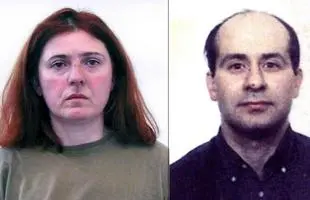
Il 2 marzo 2003 il sovrintendente Petri, con i colleghi Bruno Fortunato e Giovanni Di Fronzo, svolge servizio di scorta viaggiatori su un treno regionale sulla tratta ferroviaria Roma-Firenze. Poco dopo la fermata alla stazione di Camucia-Cortona, Petri e gli altri colleghi, durante controlli di routine, decidono di verificare le generalità di un uomo e una donna che viaggiavano a bordo del vagone. Questi, dopo aver esibito documenti falsi ai poliziotti che si accorgevano delle incongruenze, reagiscono nei loro confronti.
L’uomo estraeva una pistola puntandola al collo del sovrintendente Petri e intimando agli altri poliziotti di gettare le armi. Uno dei due poliziotti obbedisce gettando la propria pistola sotto i sedili del convoglio, ma l’uomo reagisce ugualmente sparando alla gola di Petri, uccidendolo sul colpo, e sparando anche contro l’ultimo poliziotto armato che, nonostante le gravi ferite, riesce a rispondere al fuoco dell’assalitore ferendolo mortalmente. La donna preme il grilletto della propria pistola contro l’ultimo poliziotto, ma l’arma non funziona, perché ancora con la sicura innestata. Ne segue una colluttazione al termine della quale la terrorista è bloccata. Secondo le dichiarazioni dell’agente Fortunato:
«Verso la terza-quarta vettura io (Fortunato, ndr) e Di Fronzo ci fermammo per identificare una persona, mentre Petri era andato avanti ed era entrato in uno scompartimento” racconterà poi al processo il sovraintentende Bruno Fortunato “Ho alzato lo sguardo, e ho visto Petri uscire dallo scompartimento con dei documenti in mano e cominciare a telefonare col cellulare collegato alla sala operativa della questura di Firenze. Poi ho visto un uomo (Galesi, ndr) che si avvicinava e gli puntava una pistola all’altezza della gola. Io e Di Fronzo ci siamo avvicinati di qualche passo e io gli ho fatto “ma che fai, butta quella pistola”. Lui invece ci ha gridato qualcosa come “datemi le armi, consegnatele a lei” (la Lioce, ndr). Io avevo sfilato la mia pistola dalla fondina e la nascondevo dietro lo spigolo di una poltrona. Lei mi è passata accanto senza guardarmi, poi ho capito che puntava alla pistola che Di Fronzo intanto aveva gettato per terra sotto alcuni sedili. Quando lei era appena dietro di me, ho sentito un pizzico all’addome (il colpo sparato da Galesi, ndr). Poi ho sentito qualche altro colpo, ma non so quanti. Emanuele (Petri, ndr) era a terra, io ho alzato la pistola e ho sparato. Galesi è caduto a terra, disteso nel corridoio. A quel punto sento Di Fronzo che mi fa “Bruno, dammi una mano”. Mi sono girato ma non me la sono sentita di fare un’altra cosa (di sparare, ndr). Ho rimesso la pistola nella fondina ho visto l’imputata distesa su una poltrona con una pistola fra le gambe che scarrellava e premeva il grilletto, alcune volte, senza che partisse il colpo. Di Fronzo era dietro di lei, piegato sullo schienale di una poltrona e cercava di bloccarla ma inutilmente perché non arrivava alla pistola. Ho visto la donna che cercava di riarmare l’arma più volte e di sparare verso di me. Dopo ho capito che era l’arma che Di Fronzo aveva gettato sotto i sedili. Gli ho strappato la pistola dalle mani, l’ho data a Di Fronzo e l’ho ammanettata. Poi sono andato a vedere più avanti. Galesi rantolava per terra, Emanuele purtroppo era disteso senza vita.»
Il treno si ferma quindi alla stazione di Castiglion Fiorentino dove giungono i primi soccorsi per le persone ferite, tra i quali l’assalitore Galesi (morto alcune ore dopo in ospedale) e l’agente Fortunato, salvato con una lunga operazione chirurgica. Scosso dalla tragedia, non si riprese mai completamente e si suicidò il 9 aprile 2010 a Nettuno sparandosi un colpo di pistola alla testa.
Le prime indagini accertarono che i due sospetti controllati dai poliziotti erano terroristi facenti parte delle Nuove Brigate Rosse e, dalle ricostruzioni e dal materiale rinvenuto sul treno e nella borsa della donna (documenti, floppy disk e due palmari), gli investigatori riuscirono a catturare, nel periodo successivo, tutti gli appartenenti dell’organizzazione terroristica responsabile anche degli omicidi di Massimo D’Antona e Marco Biagi, avvenuti nel 1999 e nel 2002.
Petri il giorno della sua morte non doveva prestare servizio, ma aveva chiesto un cambio turno per assistere un ex collega dei Carabinieri malato gravemente.
Fonte
Wikipedia
Approfondimenti
Ugo Maria Tassinari
2 marzo 2003: muore in un conflitto a fuoco Mario Galesi, leader delle Nuove Br
Ministero dell’Interno
05.03.2003Sparatoria con i terroristi sul treno Roma-Firenze
Toscana Oggi
Le Br preparavano un attentato ad Arezzo
La provincia di Cremona
Incubo BR. Arrestata Desdemona Lioce.
Wikipedia
FirenzeToday
Nuove brigate rosse: Nadia Desdemona Lioce resta al 41 Bis
Quotidiano nazionale
Suicida poliziotto: nel 2003 arrestò la brigatista Nadia Desdemona Lioce
Il Fatto Quotidiano
Lettera dal carcere del brigatista Morandi: “Onore al compagno Galesi”
Feltrinelli Editore
Francesco La Licata: “Br: avevamo a che fare con un cenacolo di disperati”
Video
TGR Umbria
Emanuele Petri, l’ultima vittima delle Br.
Sound
Radio radicale
Emanuele Petri, da Wikipedia
Lioce e Galesi, da Corriere della Sera
English version
Petri joined the Police in October 1973 as a rookie guard, attending the State Police School in Trieste. After being initially stationed in Rome, and then in Florence and Arezzo, his residence remained in Tuoro sul Trasimeno, where he married and created his own peaceful family life with his wife Alma. In 1992, he was assigned to the Polfer at the Terontola station.
On March 2, 2003, Superintendent Petri, with his colleagues Bruno Fortunato and Giovanni Di Fronzo, was providing passenger escort duty on a regional train on the Rome-Florence railway line. Shortly after stopping at the Camucia-Cortona station, Petri and his colleagues decided to check the identification of a man and a woman traveling in their train car. Upon showing fake documents to the officers, who noticed the discrepancies, the suspects reacted against them.
The man drew a pistol and aimed it at Superintendent Petri’s neck, ordering the other officers to throw down their weapons. One of the policemen obeyed by throwing his pistol under the train seats, but the man still shot Petri in the throat, killing him instantly, and also shot the last armed policeman, who despite serious injuries, managed to fire back and fatally wound the assailant. The woman attempted to fire her pistol at the last policeman, but the weapon did not function because the safety was still engaged. A struggle ensued, during which the terrorist was subdued. According to the statements of Officer Fortunato:
“Toward the third-fourth car, Di Fronzo and I stopped to identify a person, while Petri had gone ahead and entered a compartment,” Superintendent Bruno Fortunato recounted during the trial. “I raised my eyes and saw Petri coming out of the compartment with documents in hand and starting to make a call with a mobile phone connected to the operational room of the Florence police headquarters. Then I saw a man (Galesi, Editor’s note) approaching and pointing a gun at his throat. Di Fronzo and I approached a few steps, and I said to him ‘what are you doing, drop that gun.’ Instead, he shouted at us something like ‘give me the guns, hand them over to her’ (Lioce, Editor’s note). I had drawn my pistol from the holster and was hiding it behind the corner of an armchair. She walked past me without looking at me, then I realized she was aiming at the pistol that Di Fronzo had meanwhile thrown to the ground under some seats. When she was just behind me, I felt a pinch in my abdomen (the shot fired by Galesi, Editor’s note). Then I heard a few more shots, but I don’t know how many. Emanuele (Petri, Editor’s note) was on the ground, I raised my pistol and fired. Galesi fell to the ground, stretched out in the corridor. At that point, I heard Di Fronzo telling me ‘Bruno, give me a hand.’ I turned around but I didn’t feel like doing anything else (shooting, Editor’s note). I put the pistol back in the holster and saw the defendant lying on an armchair with a pistol between her legs, clicking and pressing the trigger, a few times, without the shot firing. Di Fronzo was behind her, bent over the back of an armchair, trying to restrain her but unsuccessfully because he couldn’t reach the pistol. I saw the woman trying to rearm the weapon several times and shoot at me. Afterwards, I realized it was the gun that Di Fronzo had thrown under the seats. I ripped the pistol from her hands, gave it to Di Fronzo, and handcuffed her. Then I went forward to check.”
The train then stopped at Castiglion Fiorentino station, where first aid arrived for the injured people, including the assailant Galesi (who died a few hours later in the hospital) and Officer Fortunato, saved through a lengthy surgical operation. Shaken by the tragedy, he never fully recovered and committed suicide on April 9, 2010, in Nettuno, shooting himself in the head.
Initial investigations determined that the two suspects checked by the policemen were terrorists belonging to the New Red Brigades, and from the reconstructions and the material found on the train and in the woman’s bag (documents, floppy disks, and two PDAs), investigators managed to capture all the members of the terrorist organization responsible for the murders of Massimo D’Antona and Marco Biagi, which occurred in 1999 and 2002, respectively.
On the day of his death, Petri was not supposed to be on duty but had requested a shift change to assist a seriously ill former colleague of the Carabinieri.
