
ATTACCO TERRORISTICO AI TRENI A MADRID
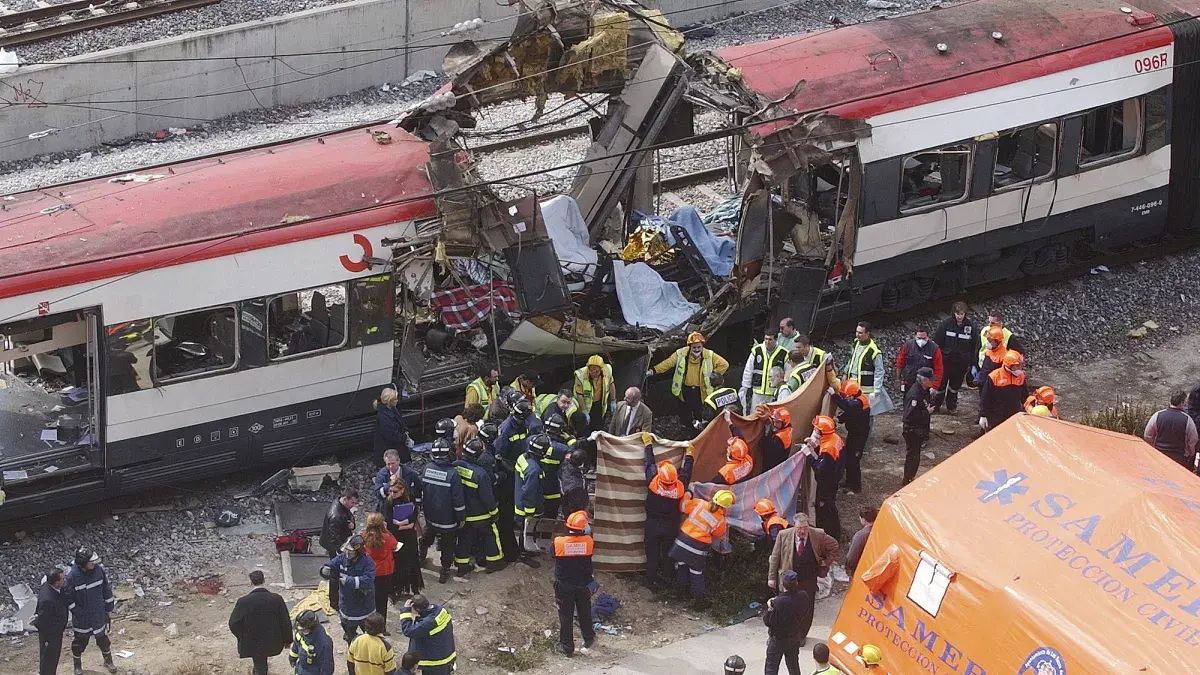
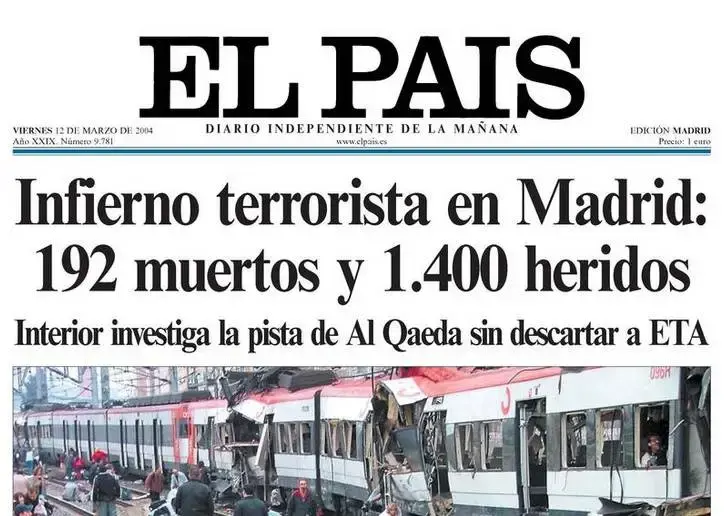
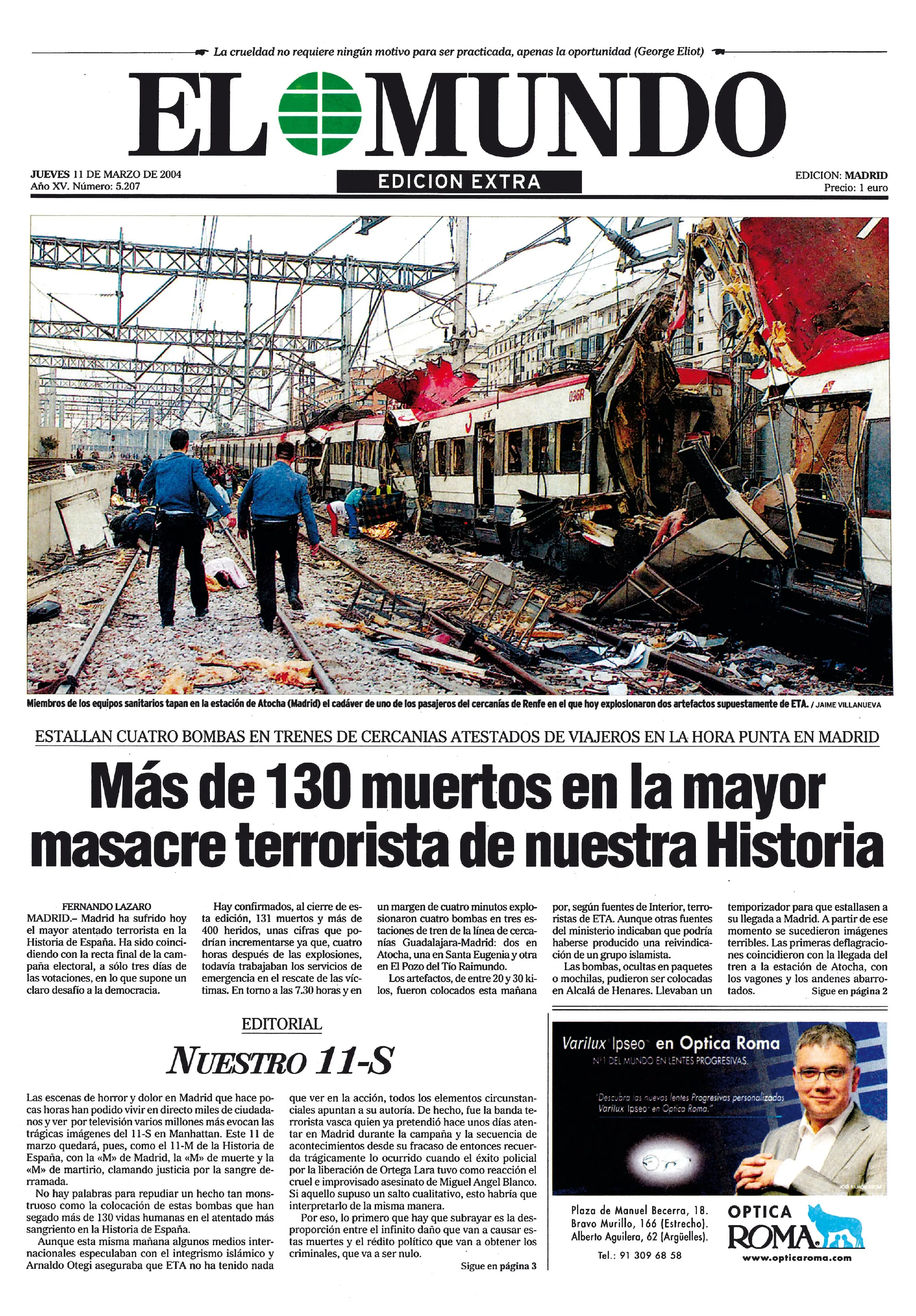
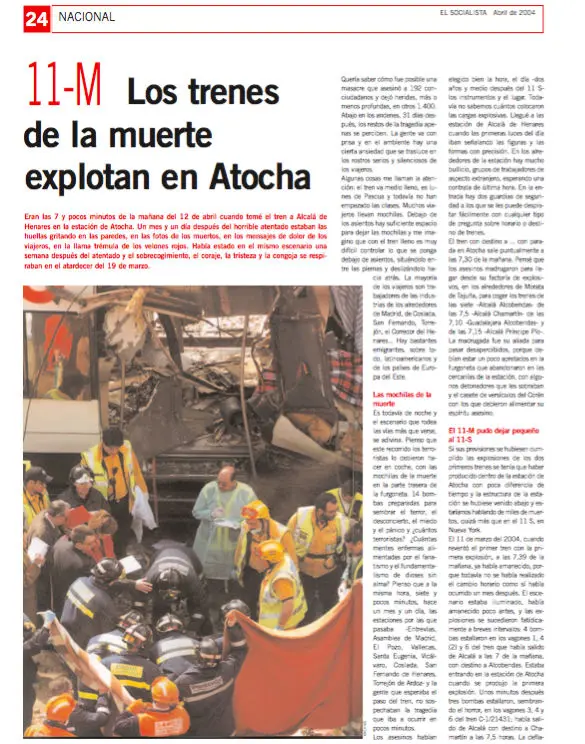
Il ricordo dell'11 settembre era ancora vivo, l'11 marzo del 2004, quando Madrid divenne teatro del più grande attentato terroristico in terra europea e che divenne il primo di una lunga serie. Alle 7:40, orario di punta, dieci delle tredici bombe piazzate dai terroristi jihadisti esplosero su quattro diversi treni delle ferrovie regionali Cercanias di Madrid, presso le stazioni di Atocha, Santa Eugenia, El Pozo e vicino via Téllez, causando un totale di 193 vittime.
Tra le vittime di quei terribili attentati, uno dei peggiori in Europa dalla Seconda Guerra Mondiale, c’erano persone di 17 nazionalità diverse. Sul treno esploso alla stazione di Atocha morirono 34 persone, 63 quando il treno si trovava nella zona di Calle Téllez, 65 presso la stazione di El Pozo, 14 a Santa Eugenia e 16 in diversi ospedali.
L’ultima persona a morire per quegli attentati, la 193°, è deceduta nel 2014 dopo dieci anni di coma. Più di 2mila i feriti nella tragedia che colpì al cuore la Spagna e l'Europa.
Subito dopo gli attentati il presidente del governo spagnolo del PP, José María Aznar attribuì pubblicamente all’ ETA la responsabilità dei tragici eventi. Numerosi corrispondenti stranieri ricevettero telefonate dal Governo che indicavano come responsabile l'organizzazione terroristica basca, per "permettere di confutare qualunque dubbio che si potesse generare nelle parti interessate". Il Ministero degli Esteri istruì tramite fax le ambasciate spagnole nel mondo in modo che confermassero le responsabilità dell'ETA. La diplomazia spagnola riuscì perfino a far sostenere dal Consiglio di Sicurezza delle Nazioni Unite la responsabilità del gruppo terrorista basco nella sua risoluzione 1530 dell'11 marzo.
Nonostante ciò, il giorno stesso degli attentati, giovedì, vennero alla luce degli indizi che contraddicevano la versione del governo, accreditando l'ipotesi di una responsabilità di gruppi fondamentalisti islamici. Alcuni mezzi di comunicazione stranieri diedero risalto a queste ipotesi e
avanzarono una serie di critiche al governo per il fatto di non riconoscere apertamente che si trattasse di un attentato di radice islamica e mantenere l'ipotesi ETA. Queste critiche diedero inizio a una polemica sulle effettive responsabilità e le relative implicazioni elettorali.
Durante la notte dell'11 marzo infatti furono ritrovati in un furgoncino parcheggiato nella città di Alcalá de Henares, da dove provenivano tre dei quattro treni, un nastro magnetico in lingua araba con versetti del Corano assieme a dei detonatori rubati da poco. Il nastro conteneva versetti usati dai terroristi islamici per farsi coraggio prima di entrare in azione, o addirittura, secondo indicazioni del CNI, costituiva una vera e propria rivendicazione degli attentati con l'intenzione di chiarire chi fossero gli autori.
Il quotidiano al-Quds al-ʿArabi ricevette quella stessa notte presso la sua sede di Londra una lettera di rivendicazione. La lettera affermava che la Brigata Abu Hafs al-Masri, a nome di al-Qāʿida, la rete terroristica di Osama bin Laden, era responsabile degli attentati di Madrid, attuati come regolamento di conti con la Spagna, accusata di complicità con gli Stati Uniti e la Gran Bretagna in una crociata contro l'Islam.
La domenica alle 19:40 la rete televisiva Telemadrid ricevette una chiamata che informava della presenza di un video di rivendicazione dell'attentato. La polizia recuperò una videocassetta che conteneva una comunicazione in arabo di un uomo con accento marocchino. Nel video l'uomo affermava di essere Abu Dujan al-Afghani, portavoce di al-Qāʿida in Europa, e rivendicava gli attentati a nome del gruppo terrorista. Più tardi si seppe che il video era stato registrato in tutta fretta vedendo che il governo manteneva l'ipotesi dell'ETA.
Quella stessa domenica si tennero le elezioni spagnole. Il partito di Aznar, che aveva giocato sull’ipotesi ETA anche in chiave politica, smentito dalla realtà dei fatti venne sconfitto dal PSOE di Zapatero.
Fonti
TGCom24
Madrid, la Spagna ricorda l'11 marzo 2004 La strage dei pendolari dieci anni dopo
Itagnol.com
Wikipedia
Attentati di Madrid dell'11 marzo 2004 - Wikipedia
Approfondimenti
su La Repubblica
https://www.repubblica.it/speciale/2004/dossier_madrid/index.html
Il processo
Su TGCOM24
Processo Madrid: Rabei non risponde
Su Euronews
Attentato Barcellona: pene dagli 8 ai 53 anni per i tre imputati | Euronews
Il memoriale
Spagna: a Madrid inaugurato memoriale vittime dell'11 marzo 2004 | Euronews
da Euronews
da El Itagnol
da Arquitectura Viva
da PSOE
English version
TERRORIST ATTACK ON THE TRAINS IN MADRID
The memory of 11 September was still vivid on 11 March 2004, when Madrid became the scene of the largest terrorist attack on European soil, and the first in a long series. At 7:40 a.m., rush hour, ten of the thirteen bombs planted by jihadist terrorists exploded on four different Cercanías commuter trains in Madrid, at the Atocha, Santa Eugenia, and El Pozo stations and near Calle Téllez, causing a total of 193 deaths.
Among the victims of those terrible attacks, some of the worst in Europe since the Second World War, there were people of 17 different nationalities. On the train that exploded at Atocha station, 34 people died, 63 when the train was in the Calle Téllez area, 65 at El Pozo station, 14 at Santa Eugenia, and 16 in various hospitals.
The last person to die from those attacks, the 193rd victim, passed away in 2014 after ten years in a coma. More than 2,000 people were injured in the tragedy that struck at the heart of Spain and Europe.
Immediately after the attacks, the Spanish prime minister from the PP, José María Aznar, publicly attributed responsibility for the tragic events to ETA. Numerous foreign correspondents received phone calls from the government indicating the Basque terrorist organization as responsible, in order “to dispel any doubt that might arise among interested parties.” The Ministry of Foreign Affairs instructed Spanish embassies around the world by fax to confirm ETA’s responsibility. Spanish diplomacy even managed to have the United Nations Security Council endorse the responsibility of the Basque terrorist group in its Resolution 1530 of 11 March.
Despite this, on the very day of the attacks, Thursday, evidence emerged that contradicted the government’s version, supporting the hypothesis of responsibility on the part of Islamist fundamentalist groups. Some foreign media outlets highlighted these hypotheses and put forward a series of criticisms of the government for not openly recognizing that it was an attack of Islamic origin and for maintaining the ETA hypothesis. These criticisms triggered a controversy over the actual responsibilities and their electoral implications.
During the night of 11 March, a van parked in the city of Alcalá de Henares, where three of the four trains had originated, was found to contain an audiotape in Arabic with verses from the Koran together with detonators that had recently been stolen. The tape contained verses used by Islamic terrorists to give themselves courage before going into action, or even, according to indications from the CNI, constituted a real claim of responsibility for the attacks, intended to make clear who the perpetrators were.
That same night, the newspaper al-Quds al-ʿArabi received a letter claiming responsibility at its London office. The letter stated that the Abu Hafs al-Masri Brigade, in the name of al‑Qaeda, Osama bin Laden’s terrorist network, was responsible for the Madrid attacks, carried out as a settling of scores with Spain, accused of complicity with the United States and Great Britain in a crusade against Islam.
On Sunday at 7:40 p.m., the television network Telemadrid received a call informing it of a video claiming responsibility for the attack. The police retrieved a videocassette containing a statement in Arabic by a man with a Moroccan accent. In the video, the man claimed to be Abu Dujan al-Afghani, al‑Qaeda’s spokesman in Europe, and he claimed responsibility for the attacks on behalf of the terrorist group. It was later learned that the video had been hastily recorded when it became clear that the government was sticking to the ETA hypothesis.
That same Sunday, the Spanish elections were held. Aznar’s party, which had leaned on the ETA hypothesis also for political purposes and was disproved by the facts, was defeated by Zapatero’s PSOE.
